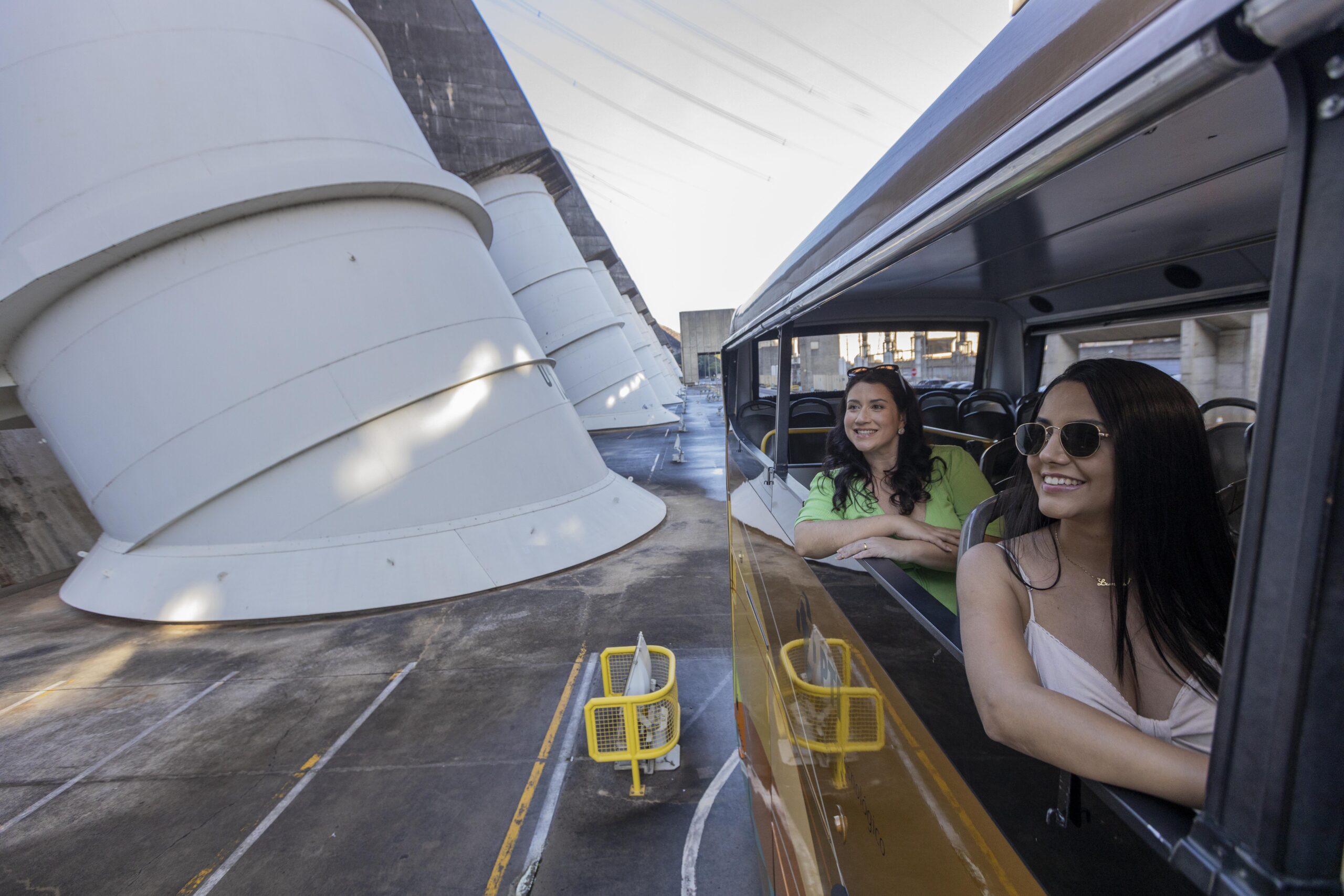
A Parigot de Souza plant It is one of the most impressive examples of Brazilian hydroelectric engineering and is part of the select group of large power plants that help sustain the national energy matrix.
Located in Antonina, on the coast of Paraná, the power plant stands out not only for its energy generation, but also for its innovative underground design, which respects the landscape of the Serra do Mar mountain range and the preserved Atlantic Forest.
So, just like the Itaipu Hydroelectric Power Plant, the Governador Parigot de Souza Power Plant is part of a set of projects that position Paraná as one of the most important states in the generation of clean energy in Brazil.
Continue reading and learn more about one of them. hydroelectric power plants in Brazil!
Where is the Parigot de Souza Power Plant located?
The Parigot de Souza Power Plant is located in the municipality of Antonina, on the coast of Paraná.
However, its main reservoir is located in Campina Grande do Sul, on the first plateau of Paraná, along the BR-116 highway.
This unique configuration allows the plant to take advantage of the large natural difference in elevation between the plateau and the coast, using the force of gravity to generate energy efficiently and with less environmental impact.
Governor Parigot de Souza Power Plant: A Unique Project in Brazil

The Governador Pedro Viriato Parigot de Souza hydroelectric power plant, formerly known as Capivari-Cachoeira, began commercial operation in 1971 and remains to this day the largest underground hydroelectric power plant in southern Brazil.
Its operation is based on an unusual concept: the transfer of water between river basins.
Thus, water is collected from the Capivari River, dammed on the plateau, and conveyed through an intake tunnel more than 14 km long, excavated under the Serra do Mar mountain range, until it reaches the turbines installed inside the mountain.
This tunnel crosses the Ibitiraquire massif, a region that includes some of the highest mountains in southern Brazil, such as Pico Paraná.
Technical Data for the Parigot de Souza Plant
Among the key figures for the Parigot de Souza plant, the following stand out:
- Total installed capacity: 260 MW
- Number of generating units: 4 Pelton-type turbines
- Power output of each turbine: 65 MW
- Total hydraulic head: 754 meters
- Extension of the adduction tunnel: 14,1 km
- Powerhouse: completely underground
The water reaches speeds exceeding 400 km/h before powering the turbines, allowing the plant to operate with a small volume of water and high energy efficiency.
Parigot de Souza Power Plant: Sustainability and Integration with the Environment

One of the great distinguishing features of the Parigot de Souza plant is its integration with the environment.
Ultimately, being underground, the power plant practically does not interfere with the landscape of the Serra do Mar, one of the most preserved areas of the Atlantic Forest in Brazil.
This deployment model, pioneering at the time of its construction, has become a benchmark in projects that seek to reconcile energy generation, environmental preservation, and operational safety.
Furthermore, the plant is operated by Copel, a company responsible for several hydroelectric plants in the state and recognized for its practices focused on sustainability and innovation.
Parigot de Souza Power Plant: Is it possible to visit?
The Parigot de Souza hydroelectric plant does not operate as a regular tourist attraction, with ticket sales and daily visits, as is the case at Itaipu.
However, during specific periods, technical or educational visits may occur by institutional appointment.
Ultimately, even without being open to the public, the power plant sparks great interest among students, engineers, researchers, and energy enthusiasts, especially due to its underground design and historical engineering significance.
So, for those who want to experience a complete energy tourism experience, a visit to the Itaipu Hydroelectric Power Plant in Foz do Iguaçu is the ideal option, with structured tours, educational experiences, and direct contact with the largest generator of clean energy on the planet.

The Importance of the Parigot de Souza Plant for Paraná
Designed back in the 1950s, the power plant was fundamental in sustaining the economic growth of... Paraná in the following decades, especially in the eastern region of the state.
Thus, its construction involved monumental works, such as the excavation of more than 22 km of tunnels and the movement of hundreds of thousands of cubic meters of rock.
Furthermore, the choice of an underground project demonstrated, even back then, a concern for the rational use of land and environmental preservation, issues that are increasingly relevant in today's energy landscape.
Hydroelectric Power Plants in Paraná and Brazil
The Governador Parigot de Souza hydroelectric plant is part of the Paraná hydroelectric power plant complex, alongside projects such as Itaipu and the Segredo hydroelectric plant.
Nationally, it joins other large power plants, such as Furnas, Belo Monte and Ilha Solteira, which guarantee energy security for the country.
This interconnected system allows energy generated in different regions to be distributed according to demand, reinforcing the strategic importance of these power plants for the economic and social development of Brazil.
Hydroelectric Power Plants: Energy, Tourism, and Awareness
Learning about stories like that of the Parigot de Souza Power Plant helps us understand how Brazilian engineering has evolved and how different solutions have been adopted to generate energy efficiently and sustainably.
No Itaipu TourismThis connection between energy, knowledge, and tourism takes shape through experiences that allow visitors to understand, in practice, the role of hydroelectric power plants in the daily life of cities and in the preservation of the environment.
In short, the Parigot de Souza power plant is a true landmark of national engineering and a source of pride for Paraná.
Ultimately, its underground design, energy efficiency, and integration with the Atlantic Forest make it a benchmark when it comes to clean energy generation and sustainable planning.
Therefore, when learning more about hydroelectric power plants in Brazil, it's worth remembering that each one has unique solutions, challenging histories, and an essential role in building a more balanced energy future.
Did you enjoy the content? Take the opportunity to check out the... Complete blog about Itaipu Tourism!
Images: Government of Paraná; Gazeta do Povo