Iguazu Falls undoubtedly kicks off any city itinerary, but anyone who asks... What to do in Foz do Iguaçu besides the waterfalls? Discover a destination that is far more complete than you imagine.
Foz do Iguaçu brings together monumental engineering, preserved nature, gastronomy, international shopping, and cultural experiences, all within minutes of each other.
Therefore, this guide was designed for those who have already secured their tickets to the Falls and now want to enjoy the rest of their trip without missing out on what the city has to offer.
So, in addition to suggesting other tours in Foz do Iguaçu, we'll show you why... Itaipu power plant It's usually the experience that most surprises those who arrive thinking they've "seen it all."
Throughout the text, you will also understand which tour suits each travel profile, how much time to reserve, and, most importantly, why it's worth including Itaipu in your itinerary even if you have limited time in Foz.
Does Foz do Iguaçu only have the waterfalls?
Definitely not. Foz do Iguaçu is a destination with attractions ranging from engineering to wildlife, including shopping, gastronomy, and culture — therefore, those who only stay in the National Park end up only seeing a part of the city.
This happens because the region borders Brazil, Argentina, and Paraguay, which consequently concentrates experiences that don't exist anywhere else in the country—such as visiting the inside of one of the largest hydroelectric power plants in the world.
What are the best attractions besides the Falls?
Foz do Iguaçu offers options for all types of travelers. Below, we list the main ones, with special emphasis on... Itaipu power plant, which focuses on the most sought-after tours for those seeking knowledge and a truly unique experience.
Itaipu Power Plant — engineering, knowledge and uniqueness
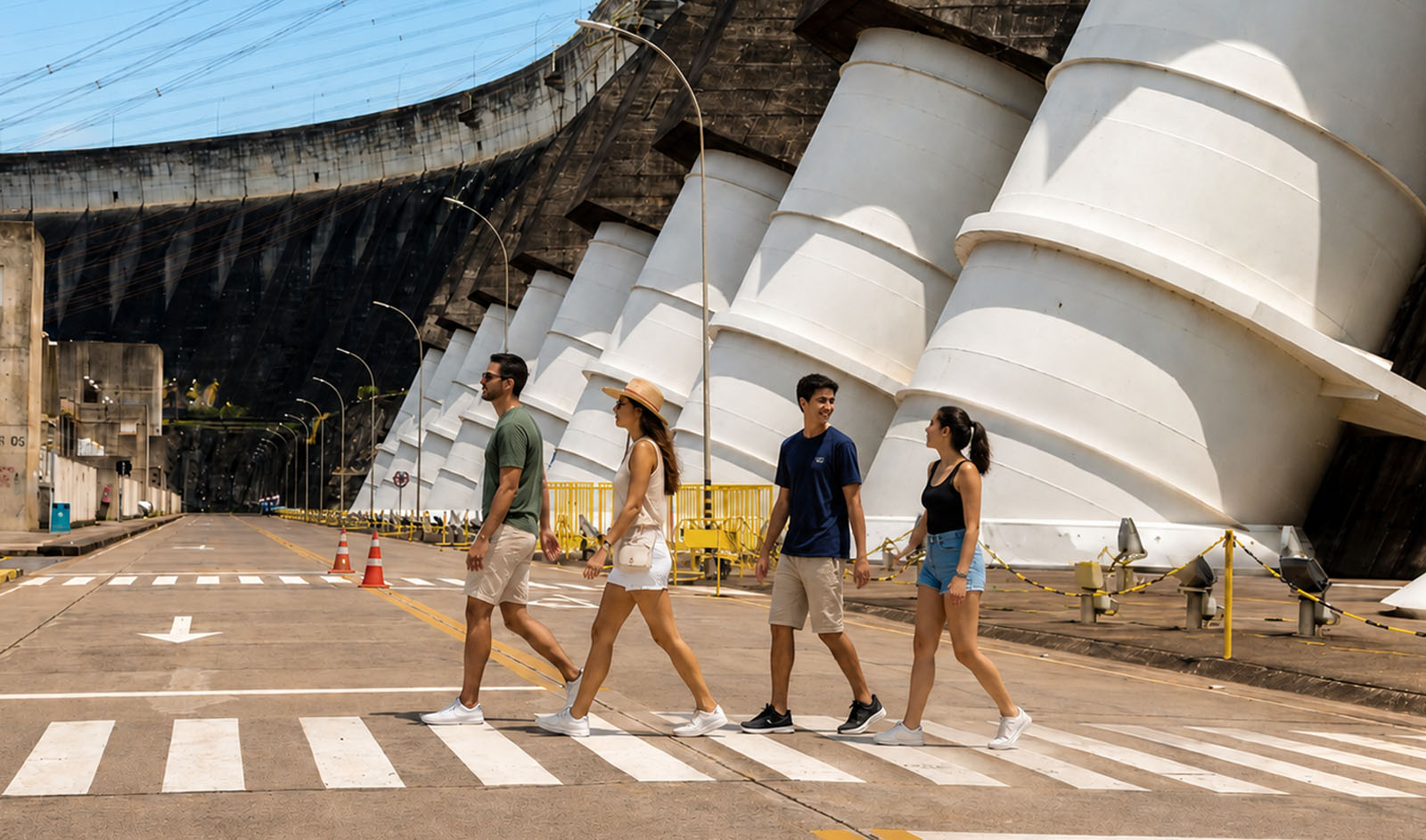
Itaipu is undoubtedly one of the most memorable tourist attractions besides the Falls for those visiting Foz do Iguaçu — and not without reason.
While the Iguazu Falls thrill with the force of nature, Itaipu impresses for another reason: the human scale of one of the largest hydroelectric power plants in the world.
In addition, the power plant's tourist complex offers various tours, each with its own unique focus:
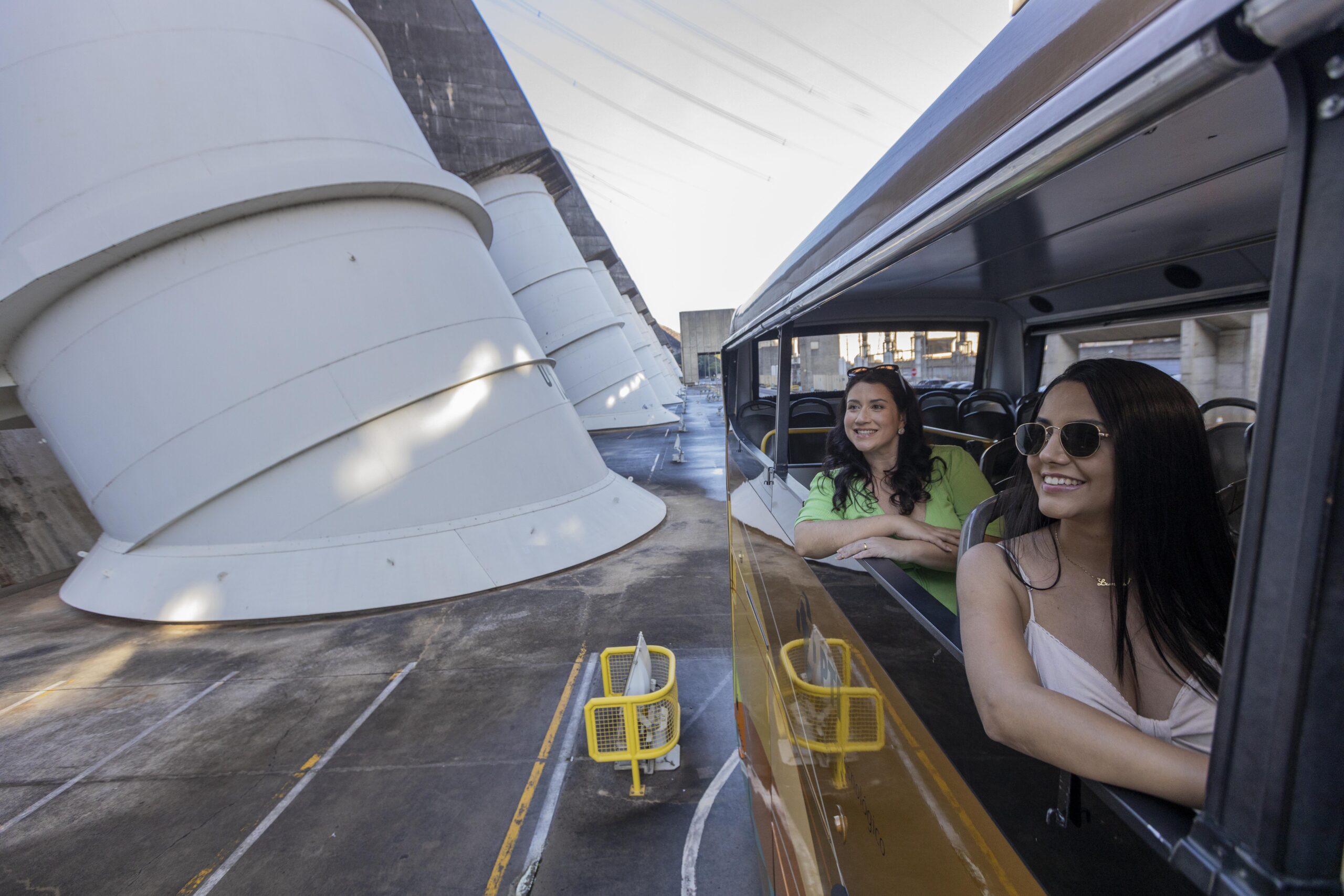
- Itaipu Panoramic: A tour of approximately 1 hour and 10 minutes in an open-top bus, with stops at external viewpoints — ideal for those who have limited time but still want to understand the scale of the power plant.
- Itaipu Special: The most comprehensive tour, lasting approximately 2 hours and 30 minutes, includes access to the interior of the powerhouse. While the Panoramic tour shows the plant from the outside, the Special tour places the visitor literally inside the engineering – among gigantic turbines and a structure that few places in the world allow you to see up close.
- Itaipu Biological Refuge: A trail of approximately 2h30 focused on the fauna and flora of the region, for those who want to balance the itinerary with a lighter and more educational contact with nature.
- Itaipu by Bike: For those who prefer a more active pace, this approximately 1 hour and 10 minute cycling route runs through the grounds of the power plant, combining physical exercise, contact with the landscape, and a different way to explore the surroundings of Itaipu. A closed tour for groups.
- Itaipu Ride: This tour has been winning over early visitors and adds another option for those who want to have a unique experience within the complex. Tour is closed to groups only.
Is Itaipu worth it for those who have already visited the Falls?

Yes. Because the approach is different — engineering and knowledge, rather than nature and landscape — Itaipu functions as a complement, not a repetition of the Iguazu Falls experience.
If the goal is to come back from the trip with a different story to tell, the Itaipu Special It is usually the most popular choice, as few destinations in the world offer the chance to walk inside a power plant of this size.
However, those who spend more days in the city will find a different way to experience Itaipu on each of the six tours.
Read also How does a hydroelectric power plant work? Understand how Itaipu works.
Bird Park
Located very close to the entrance of the Falls, the Bird Park It brings together aviaries that faithfully reproduce the natural habitat of hundreds of species — including birds, butterflies, and other animals from the regional fauna and other parts of the world.
As visitors walk along covered trails amidst the vegetation, contact with the animals happens in close proximity, without fences separating the public from most of the enclosures.
Therefore, the tour is especially appealing to families with children and nature lovers, since the experience is sensory: in addition to seeing, it is possible to hear and, in some cases, almost touch the fauna that makes up the scenery.
Located just minutes from the National Park, the Bird Park is usually included in itineraries right after or before a visit to the Falls.
AquaFoz

O AquaFoz It is one of the largest aquariums in Latin America, with millions of liters of water and hundreds of species on display.
Located directly opposite Iguaçu National Park and next to the Bird Park, the attraction offers a route that represents the journey of water from the rivers to the ocean, passing through environments that recreate the fauna of the Iguaçu River and the Paraná River before reaching the marine ecosystems.
AquaFoz is a great option both to complement a visit to the National Park on the same day and for rainy days, when outdoor activities become more difficult.
Landmark of the Three Borders
A symbolic point where Brazil, Argentina, and Paraguay meet, the Landmark of the Three Borders It is a viewpoint on the banks of the Iguaçu River, from where it is possible to observe the territories of the three countries at the same time.
At dusk, the place usually attracts visitors precisely because of the view, which makes the walk even more beautiful at that time.
In addition to the viewpoint itself, the structure includes a cultural space, green area, and surrounding food options — therefore, the Three Borders Landmark works well both as a quick stop and as an afternoon activity, especially for those who want photos with the border of the three countries in the background.
Theme parks: Dreams Park Show and Wonder Park Foz
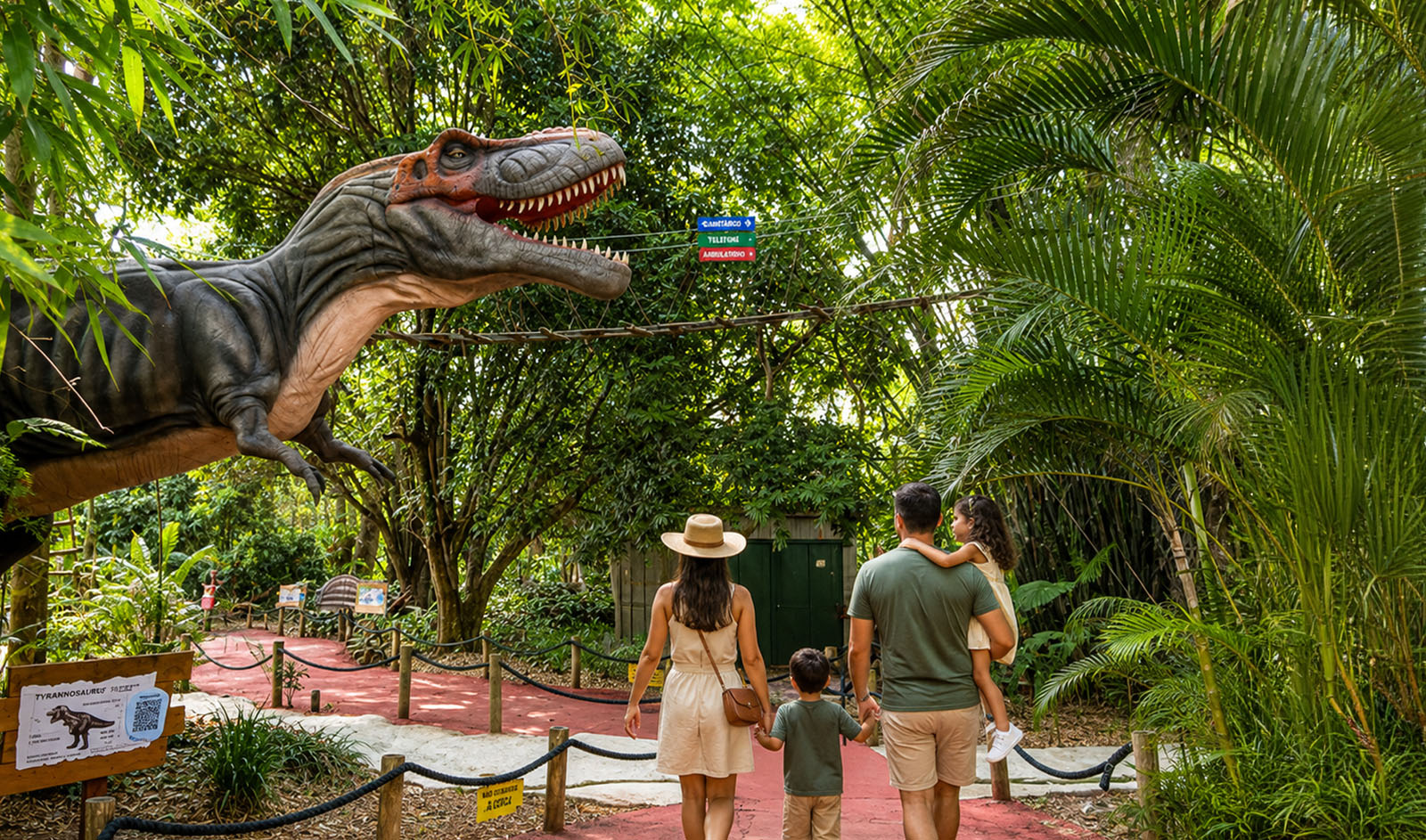
Those traveling with family will also find two entertainment complexes in Foz do Iguaçu, each with very different offerings—making it possible to combine both in the same itinerary without repeating experiences.
O Dreams Park Show It includes attractions such as wax Museum, Wonders of the World, Valley of the Dinosaurs, Dreams Ice Bar and Dreams Motor Show, operating both during the day and at night.
Already Wonder Park Foz bets on experiences such Movie Cars, Big Land, Lumina Park, Water Show and Bonnie's Burger, combining cinema, technology and entertainment.
In this way, both Dreams Park Show and Wonder Park Foz help to diversify the trip, especially on days reserved for family fun, without the commitment of a longer or educational tour.
Yup Star
A Yup Star It's the Ferris wheel in Foz do Iguaçu, standing 88 meters tall with air-conditioned cabins that can accommodate up to 8 people and allow you to choose the soundtrack during the ride.
Each lap lasts, on average, 20 minutes, enough time to observe the city and the border region from a very different angle than usual.
Since the ride is relatively quick, Yup Star works well as a complement to a busier day, fitting in between other attractions without compromising the itinerary.
Barrageiro Public Market
For those who want to experience the more local side of the city, the Barrageiro Public Market It brings together craft stalls, regional products, and typical culinary options all in one place.
The name refers to the dam workers, who participated in the construction of the Itaipu Dam — which, in a way, connects the history of the city with the daily lives of those who live in Foz.
Thus, the market is a good option for those seeking travel souvenirs, local crafts, and a gastronomic experience closer to the daily life of the population.
Budhist temple

The cultural diversity of Foz do Iguaçu is also reflected in its religious spaces.
The Buddhist Temple, with its traditional oriental architecture, well-maintained gardens, and contemplative atmosphere, is open to visitors and often surprises those who didn't expect to find this type of building in the tri-border region.
Beyond its religious significance, the temple has a strong visual and cultural appeal, making it an interesting visit even for those who do not profess the Buddhist faith but are interested in Eastern architecture and culture.
Read: Foz do Iguaçu Buddhist Temple: A Journey of Peace and Meditation
Omar Ibn Al-Khattab Mosque
In the same vein of religious and cultural diversity, the Omar Ibn Al-Khattab Mosque It is one of the main landmarks of the Arab-Muslim community in Foz do Iguaçu, with striking architecture and guided tours open to the public at specific times.
In this way, the tour is an opportunity to get to know, up close, part of the history and culture of one of the groups that helped shape the identity of the border city.
Gastronomy of Foz do Iguaçu
Finally, no itinerary in Foz do Iguaçu is complete without experiencing the city's gastronomy.
Since the region brings together Brazilian, Paraguayan, Argentinian, and strong Lebanese and Arab influences, it's possible to find, side by side, everything from steakhouses and all-you-can-eat restaurants to establishments specializing in Arabic food, such as esfihas, kibbeh, and typical sweets.
Furthermore, the proximity to Ciudad del Este and Puerto Iguazú further expands the options, combining shopping with gastronomic excursions on the other side of the border.
Therefore, reserving at least one night to sample the local cuisine is certainly a way to complete the Foz experience with another type of discovery: that of the palate.
How much time should you allocate to explore Foz do Iguaçu beyond the waterfalls?
In general, it is recommended to spend 4 to 5 days in Foz do Iguaçu to combine the Falls with the main excursions beyond them, since the range of attractions — from the Itaipu Dam to religious temples, passing through theme parks and the Barrageiro Public Market — is more extensive than one usually imagines.
Therefore, it is possible to include, for example, a whole day dedicated to the Itaipu Hydroelectric Power Plant, since the six tours within the complex have complementary offerings.
Discover one of the largest hydroelectric plants in the world. Check out tickets and tours
Plan your itinerary: where to start in Foz do Iguaçu
For those who want to decide quickly, the most balanced approach is usually:
- Set aside half a day for the Bird Park.
- A day for sightseeing at the Itaipu Dam.
- An afternoon at the Three Borders Landmark and Yup Star.
- A period dedicated to the Buddhist Temple and the Omar Ibn Al-Khattab Mosque.
- The rest of the trip will be spent shopping, enjoying food, visiting theme parks like Dreams and Wonder Park Foz, and stopping at the Barrageiro Public Market.
Want to guarantee your visit to the Itaipu Dam? Check the available times and choose between the Panoramic tour, the Special tour, and the other tours offered by the complex. Click here
Itaipu. Much more than energy.
FAQ - Frequently Asked Questions
1. Does Foz do Iguaçu only have the waterfalls?
No. In addition to the National Park, the city offers other significant attractions, such as the Itaipu Dam, the Bird Park, the Three Borders Landmark, religious temples, and shopping and dining options in the border region.
2. What to do in Foz do Iguaçu besides visiting the waterfalls in one day?
If you only have one day left, the Itaipu Panoramic tour is a good choice, as it lasts about 1 hour and 10 minutes and shows the main external points of the power plant without compromising the rest of the itinerary.
3. Is Itaipu worth it for those who have already visited the Falls?
Yes, because the proposition is different: instead of nature and landscape, Itaipu delivers engineering, knowledge, and an experience that few places in the world offer.
4. What is the difference between the Itaipu Panoramic tour and the Itaipu Special tour?
The Panoramic tour is an external tour, in an open-top bus, lasting approximately 1 hour and 10 minutes. The Itaipu Special tour, on the other hand, includes internal access to the powerhouse and lasts approximately 2 hours and 30 minutes—making it the most suitable tour for those who want to delve deeper into the engineering of the power plant.
5. How many days are needed to explore Foz do Iguaçu beyond the waterfalls?
Ideally, you should reserve 4 to 5 days, which allows you to include, in addition to the Falls, the Itaipu Dam, the Bird Park, and other tourist attractions in the city without rushing.
6. Does Foz do Iguaçu have cultural and religious options to visit?
Yes. The city is home to the Buddhist Temple and the Omar Ibn Al-Khattab Mosque, two spaces open to visitors that showcase the cultural and religious diversity of the border region.