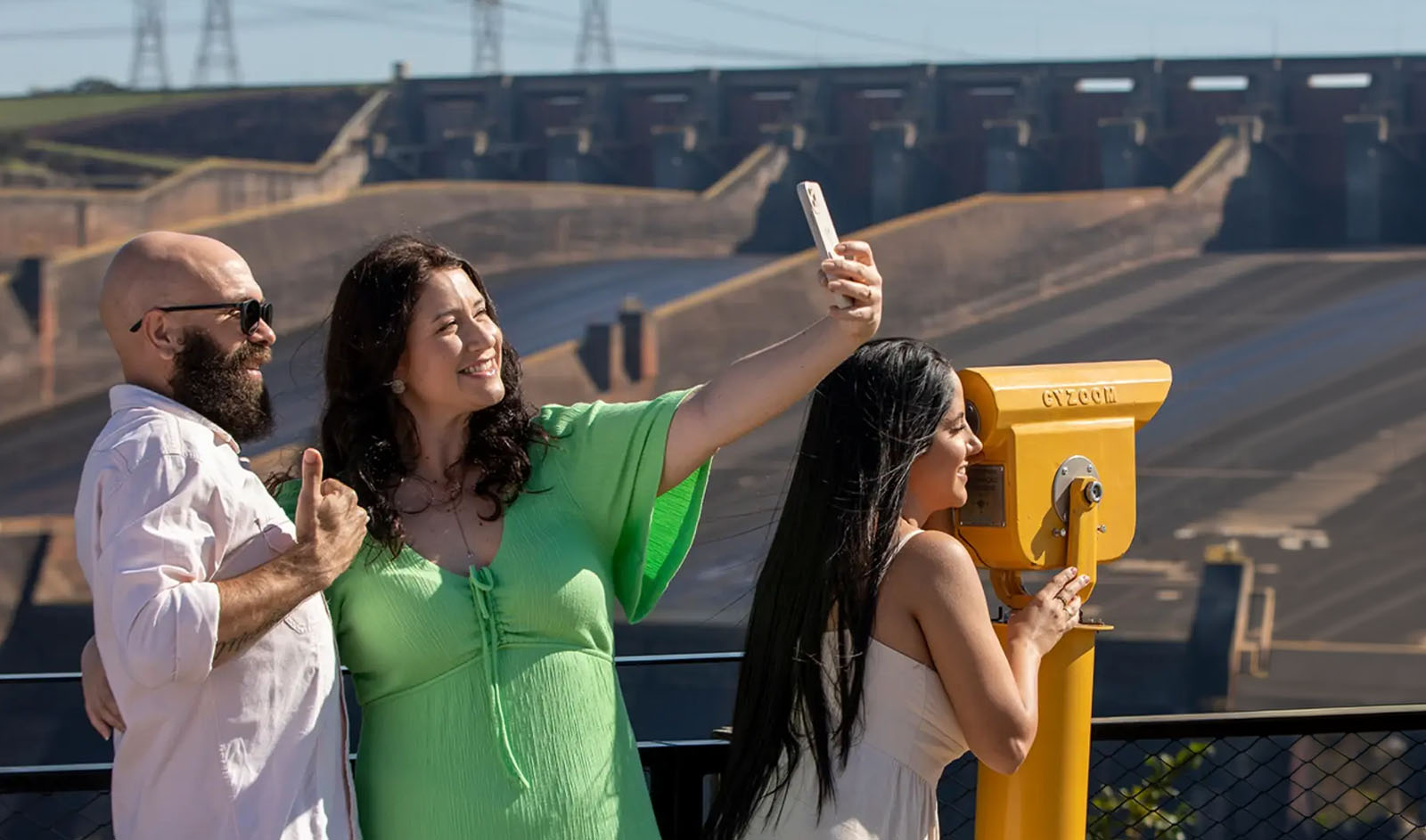
The main curiosities of the Itaipu Dam involve gigantic numbers: a dam 196 meters high, enough concrete for 210 Maracanã stadiums, and 40 workers at the peak of construction.
But the most surprising facts are behind the scenes. After all, to build the power plant, it was necessary to change the course of the Paraná River, break concrete pouring records, and transport 300-ton pieces along roads that could barely support the weight.
In this article, you'll find 15 interesting facts about Itaipu, organized by construction, engineering, energy, and nature. Additionally, you'll discover which tours offer the opportunity to see each detail up close. For a summarized version, the main figures are also available on the page... interesting facts about the power plant.
Why was the Itaipu Dam built?
The Itaipu Dam was built to harness the hydroelectric potential of the Paraná River jointly by Brazil and Paraguay. The agreement began with the Iguaçu Act in 1966 and was formalized with the Itaipu Treaty, signed on April 26, 1973.
Beyond energy, the partnership also resolved a long-standing border dispute between the two countries. Instead of fighting over the region, the governments chose to join forces.
Interestingly, 1973 was also the year of the global oil crisis. Therefore, the power plant gained even more importance as a renewable energy alternative for both countries.
To learn about the complete story, read: Itaipu Hydroelectric Power Plant: history, tours and tourism.
Interesting facts about the construction of the Itaipu Dam.
Construction began in 1974 with the arrival of the first machines at the construction site. From then on, the pace was so intense that the American magazine... Popular Mechanics He even called the construction a "Herculean task".
1. Itaipu means "the singing stone"
The name comes from the Tupi language and means "the singing stone." In fact, it pays homage to an almost always submerged island called Itaipu, which was located exactly in the area chosen for the dam.
There, the Paraná River made a sharp bend, and the current seemed to be testing its strength against the riverbanks. Therefore, studies indicated that this point was ideal for generating energy.
2. It was necessary to change the course of the Paraná River.
Before building the dam, the engineers needed to drain the riverbed. To do this, they excavated a diversion channel 2 km long, 150 meters wide, and 90 meters deep.
On October 20, 1978, 58 tons of dynamite blew up the cofferdams protecting the new canal. This allowed the river to flow through the diversion, freeing up the original riverbed for construction.
3. A ten-story building per hour
On November 14, 1978, Itaipu broke a South American record for concrete pouring: 7.207 cubic meters of concrete were poured in a single day.
To illustrate, this is equivalent to a ten-story building every hour, or 24 buildings in a single day. This feat, incidentally, was only possible thanks to seven aerial cables used to pour the concrete.
4. Concrete for 210 Maracanã stadiums and steel for 380 Eiffel Towers.
The plant consumed more than 12 million cubic meters of concrete, enough to build 210 stadiums the size of the Maracanã.
Similarly, the iron and steel used would be enough to build 380 Eiffel Towers. It is no coincidence that these dimensions have made Itaipu a benchmark in concrete studies and dam safety.
5. Up to 40 workers at the same time.
At the peak of construction, Itaipu employed around 40 workers in Brazil and Paraguay. Between 1978 and 1981, for example, up to 5 people were hired per month.
Consequently, Foz do Iguaçu changed scale. The city had only two paved streets and about 20 inhabitants when the project began; ten years later, it already had 101.447 residents.
6. A 300-ton piece took three months to arrive.
The logistics are also impressive. In 1980 alone, the transport of materials mobilized 20.113 trucks and 6.648 railway wagons.
The first turbine wheel, weighing 300 tons, left São Paulo on December 4, 1981, and only arrived at the construction site on March 3, 1982. Because many bridges couldn't support the weight, the truck had to take the longer route, covering 1.350 km.
Want to understand each stage of the project in detail? Read also: Construction of the Itaipu Dam: a monumental work of world engineering..
How long did it take to build the Itaipu Dam?
Construction began in 1974 and the dam was completed in October 1982. The first generating unit then went into operation on May 5, 1984, about ten years after the start of construction.
The first 18 units were installed over seven years, and the last two began operating in May 2007.
Interesting facts about the engineering and the Itaipu dam.
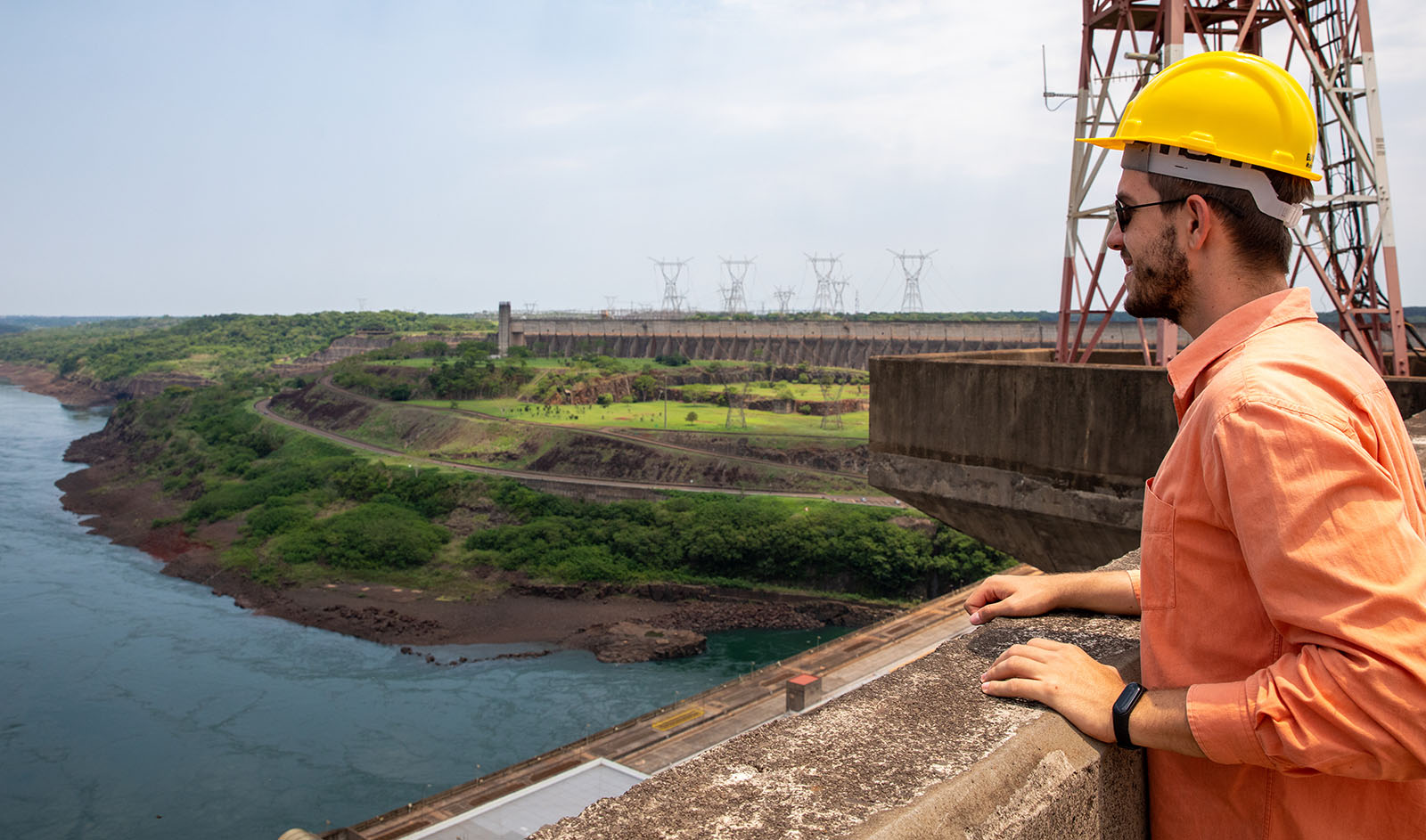
While the building's size is impressive, the structure is even more so when viewed up close. Therefore, many of these interesting facts can be discovered during the tours.
7. The dam is the height of a 65-story building.
The Itaipu dam is 7.919 meters long and has a maximum height of 196 meters, the equivalent of a 65-story building.
Furthermore, it is not a single structure. In fact, it combines three types of dams: the main one, made of concrete, and the auxiliary dams made of rockfill and earth, constructed with rocks and earth from the excavation itself.
8. There are “cathedrals” inside the dam.
The main dam is of the relieved gravity type. In practice, this model forms large internal openings that resemble the structure of a cathedral.
Therefore, these spaces earned the nickname "Concrete Cathedrals." Currently, they are part of the itinerary of... Itaipu Special, a tour that takes visitors inside the dam.
9. The white pipes are 10,5 meters in diameter.
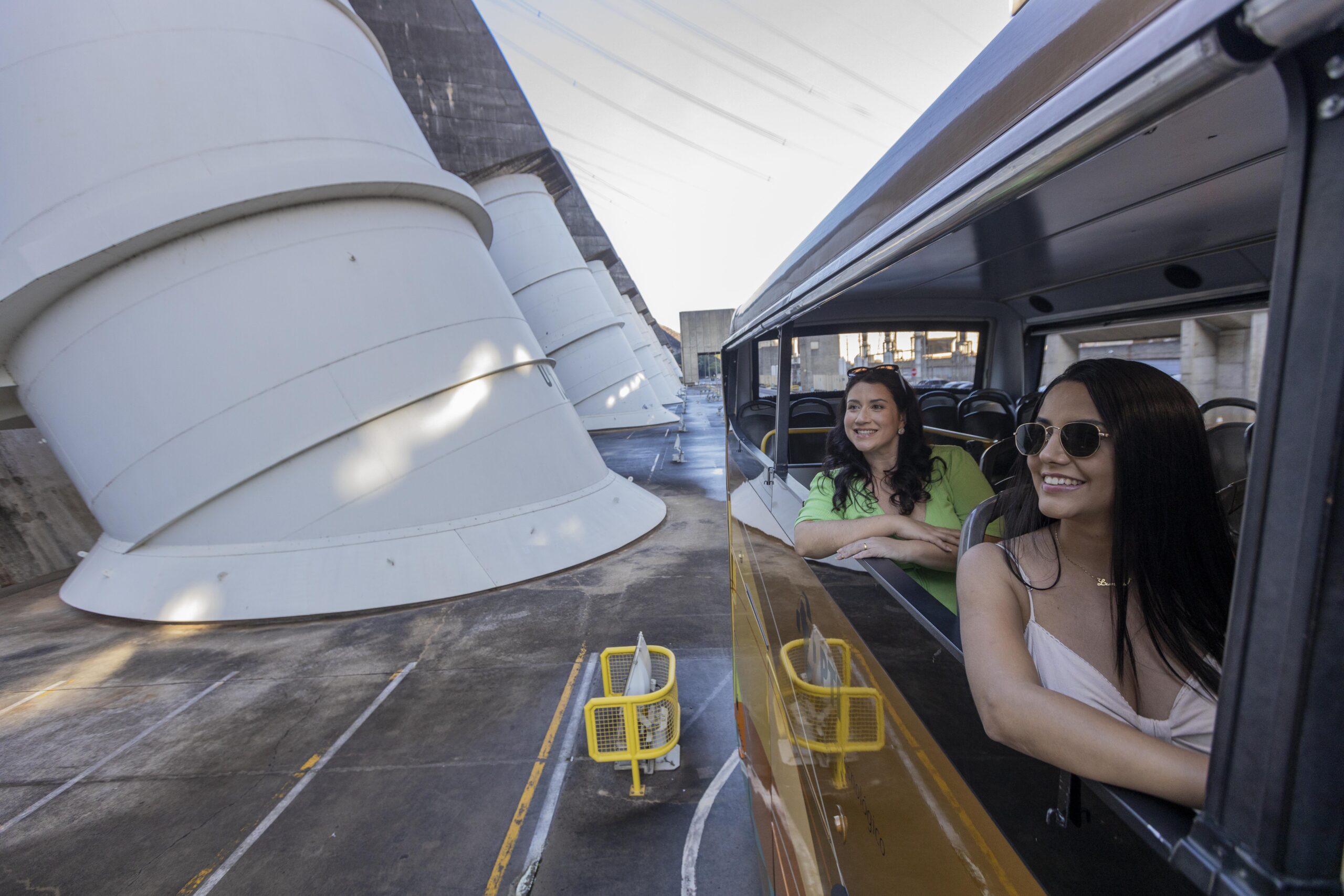
The famous white pipes are, in fact, the penstocks. In total, there are 20 pipes, each 142 meters long and 10,5 meters in internal diameter.
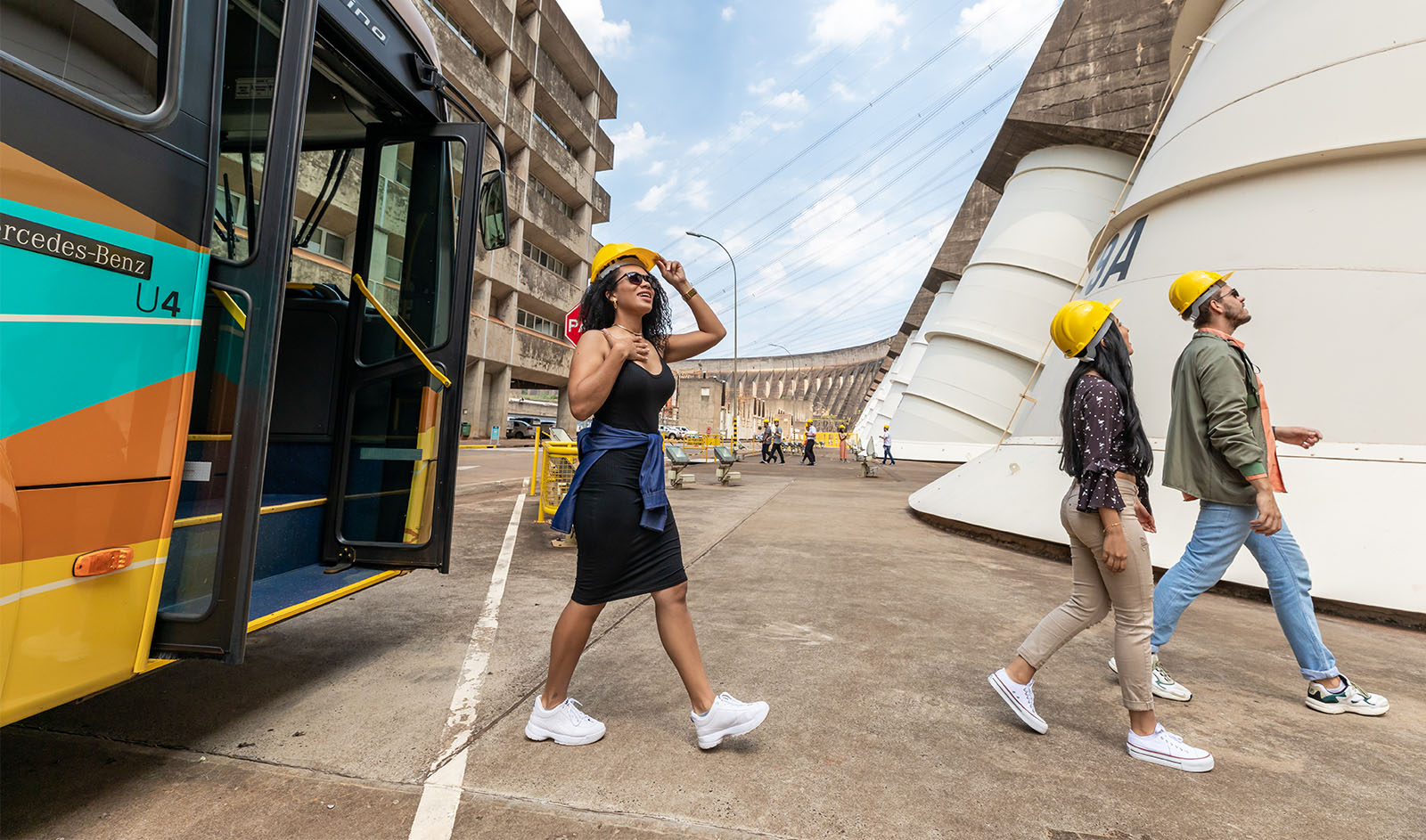
They carry water from the reservoir to the turbines. In fact, both the Itaipu Panoramic and the Itaipu Special tours pass by the Conduits Avenue, one of the most photographed spots during the visit.
10. The powerhouse is almost a kilometer long.
The powerhouse, which houses the generating units, is 968 meters long and has a maximum height of 112 meters.
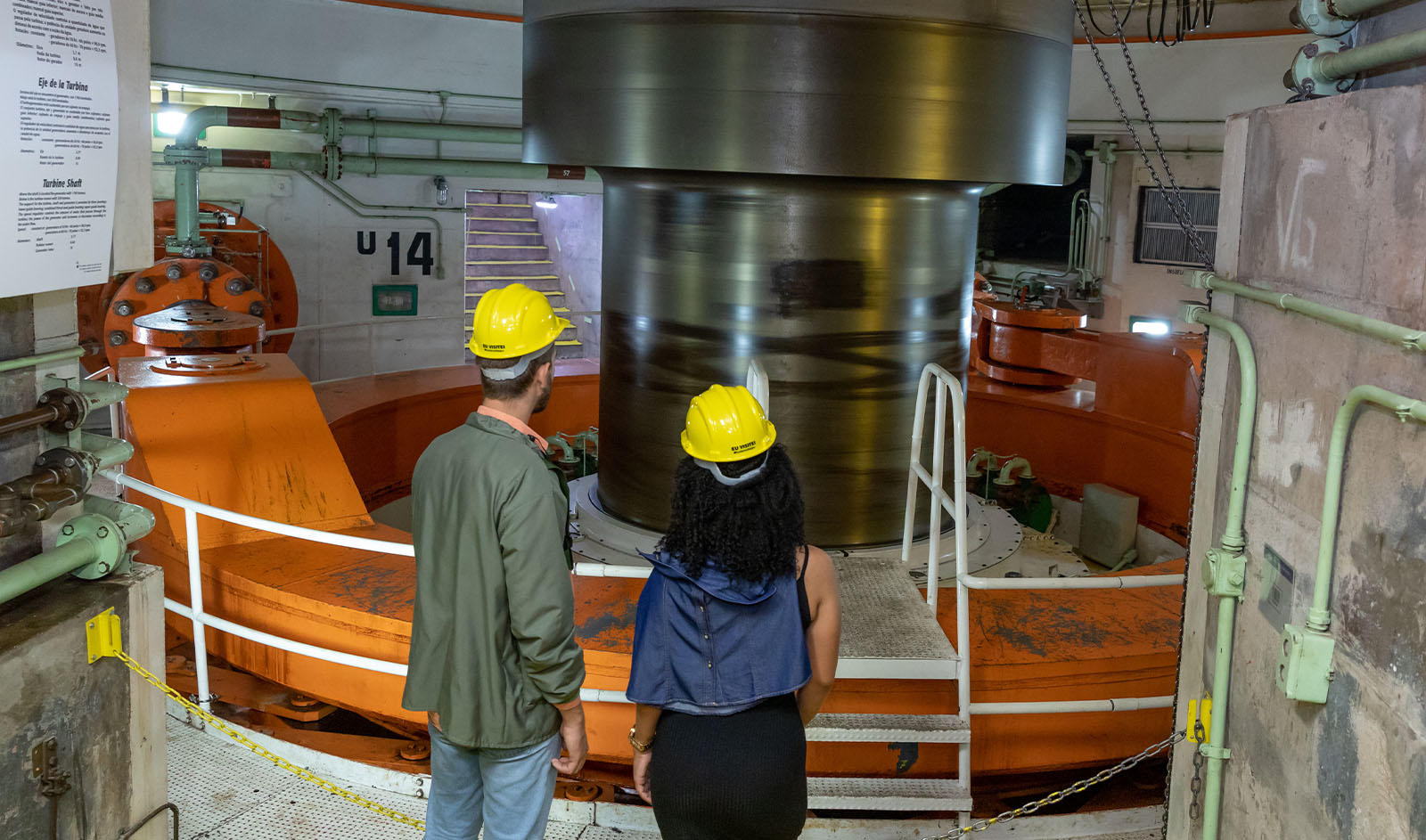
Inside, the Generating Unit Gallery and the Central Control Room show how the power plant operates on a daily basis. Both, incidentally, are on the route of the Itaipu Special Tour, which also includes a descent along the turbine shaft.
11. The project surpasses the Channel Tunnel.
According to Itaipu Binacional, the volume of earth and rock excavation at the power plant is 8,5 times greater than that of the Channel Tunnel, which connects France to England under the English Channel.
The volume of concrete, in turn, is 15 times greater. In short, the size of the project becomes evident in any comparison.
Want to know how water is converted into electricity inside the power plant? Watch: How does the Itaipu Hydroelectric Power Plant work?.
How large is the Itaipu dam?
The Itaipu dam is 7.919 meters long and 196 meters high at its highest point, the equivalent of a 65-story building.
It dams the water of the Paraná River and creates a drop of about 120 meters, which allows the turbines to operate.
On the Itaipu Special tour, visitors reach the top of the dam, 225 meters above sea level.
Interesting facts about the energy generated at Itaipu.
12. A single generating unit would supply a city of 1,5 million people.
Itaipu has 20 generating units, each with a capacity of 700 megawatts. To illustrate, this power would be enough to supply a city with 1,5 million inhabitants.
Together, therefore, the units have a total installed capacity of 14 megawatts.
13. More than 3 million GWh since 1984
Since the start of its operation, Itaipu has produced more than 3 million gigawatt-hours. Currently, the plant supplies 6,7% of the energy consumed in Brazil and 77,9% of that consumed in Paraguay.
To compare, according to Itaipu Binacional, Brazil would need to burn 536 barrels of oil per day in thermoelectric power plants to obtain the same production.
Furthermore, in 2024, all the water that reached the reservoir was converted into electricity.
Interesting facts about the lake and nature.
14. The lake filled up in just 14 days.
When the diversion channel gates were closed in October 1982, heavy rains accelerated the process. As a result, the reservoir filled in just 14 days.
Today, the lake covers an area of 1.350 km² and stretches for 170 km along the Paraná River. Interestingly, it receives water from six Brazilian states and the Federal District.
At the same time, Operation Mymba Kuera, which in Tupi-Guarani means "animal catcher," rescued 36.450 animals that lived in the area of the future lake.
15. 24 million native seedlings around the reservoir
Within the reservoir's protection zone, 24 million native tree seedlings were planted. According to Itaipu Tourism, this is the largest reforestation project of its kind in the world.
This care for nature, moreover, continues to be present in the visitor's experience. In Itaipu Biological RefugeFor example, it's possible to get a close look at the region's fauna and flora.

Learn more about the reservoir at: Itaipu lake.
Why is the Itaipu Dam illuminated at night?
The dam's illumination is part of the Itaipu Illuminated show. The project was created by lighting designer Peter Gasper in 1997 and inaugurated on November 14, 2002, with 829 points of light that outline the dam in the dark.
Currently, the ride has been paused since August 8, 2026, for the replacement of the entire system with LED technology.
Meanwhile, the other tours continue to operate normally during the day. Understand the modernization and the expected return date: Itaipu Illuminated on pause.
Where can I see these curiosities up close?
Reading about Itaipu is one thing; however, experiencing the scale of the power plant firsthand is quite another. Therefore, it's worthwhile to learn what each tour reveals:
- Itaipu Panoramic: The bus tour covers the area outside the power plant, including the Conduits Avenue, the top of the dam, and the Central Viewpoint. It is open to all ages.
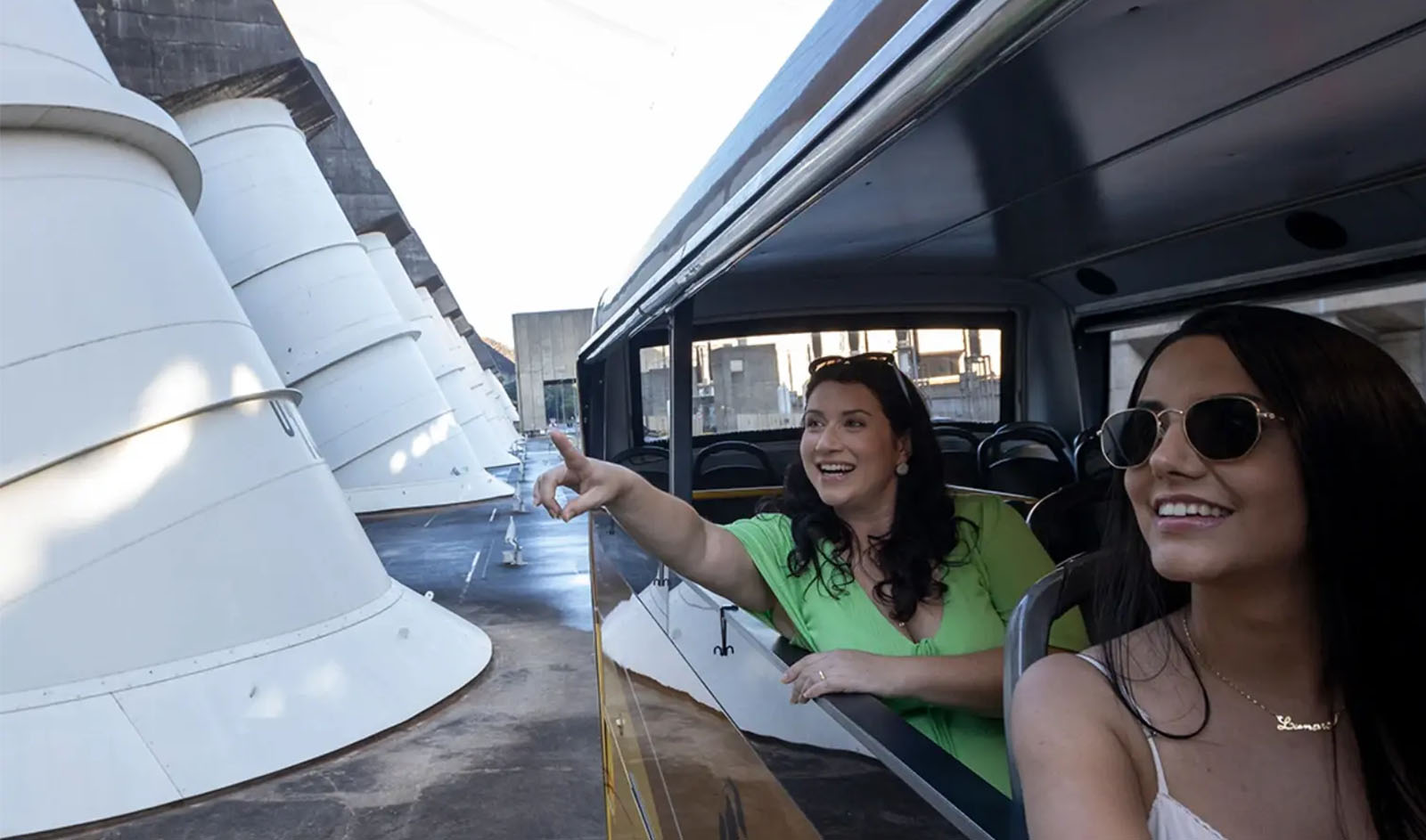
- Itaipu Special: The tour includes the Panoramic route and, in addition, takes visitors inside the dam and the powerhouse. The itinerary includes the Concrete Cathedrals, the Central Control Room, the Gallery of Generating Units, and the turbine shaft.
To compare all available tours, see: Itaipu Tour: details and information.
Still unsure if the interior tour is worthwhile? Read on: Internal tour of the Itaipu Dam: is it worth seeing the inside?.
Itaipu is much more than just numbers.
Each interesting fact about Itaipu tells a part of the story: a diverted river, a record broken in a single day, thousands of people who changed the landscape of Foz do Iguaçu.
But no amount of data can replace the feeling of walking among the Concrete Cathedrals or looking up beside the white pipes. After all, it is there that the numbers take on a real dimension.
Itaipu. Much more than energy. Choose your tour and come experience this grandeur up close: Discover the tours offered by Itaipu Tourism..
FAQ – Frequently Asked Questions about the Itaipu Hydroelectric Power Plant
1. What is the meaning of the name Itaipu?
Itaipu comes from the Tupi language and means "the singing stone." The name honors an almost always submerged island that was located in the stretch of the Paraná River chosen for the construction of the dam.
2. How many people worked on the construction of Itaipu?
At the peak of construction, approximately 40 workers were employed on the construction site and in support offices in Brazil and Paraguay. Throughout the entire construction process, the Unicon consortium alone registered around 100 workers.
3. How many turbines does the Itaipu Hydroelectric Power Plant have?
The plant has 20 generating units, each with a capacity of 700 megawatts. Together, they have an installed capacity of 14 megawatts.
4. Is it possible to visit the inside of the Itaipu Dam?
Yes. The Itaipu Special tour includes the dam's interior and the powerhouse, with concrete cathedrals, the central control room, and the turbine shaft. The tour is only permitted for those 14 years of age and older and requires official photo identification.
5. How long does the Itaipu Special tour last?
The Itaipu Special tour lasts approximately 2 hours and 30 minutes, including bus journeys, stops, and walking through the industrial area.
6. Is the Itaipu Illuminated system working?
No. The show has been on hold since August 8, 2026, for the modernization of the lighting system with LED technology. The other tours continue to operate normally during the day.